A native Mermaid and plain-text decoding of the 10 March 2023 XMind map (
Design for Learning), restoring every branch, boundary annotation, summary frame, icon marker and embedded reference link in place of serving the raw PDF.
This reading map was created in XMind on 10 March 2023 as part of early thinking behind Open Learning: From Individual Potential to Collective Discovery. Rather than serving an opaque 103 kB PDF export, this page decodes the diagram into native Mermaid figures, structured notes and clickable references.
How the XMind notes and markers decode
The original 10 March 2023 single-page XMind export (Xmind/22.11.3656, 1191.1 × 841.9 pt) carried four kinds of visual metadata alongside the topic hierarchy. No hidden pop-up note bodies or collapsed child text were embedded in the PDF's annotation or file streams—the only PDF annotations were the 13 external hyperlinks below—so every note decoded here comes faithfully from the diagram's visible annotations, markers and link targets:
- Boundary annotations (white-on-navy callouts): XMind boundaries wrapping subtrees with a framing note (for example,
bias toward practical,personal tutoring -> informative, interactive, adaptive,vision: make scientific research on learning more accessible,six-year plan since 2017?, Eric Mazur's five framing labels,Marva Collin,critique Design Thinking for Education, and Alvin Toffler's strategy quotation). - Summary frames and directional tags: Dotted summary braces (
first principle of instruction,Effective Learning Strategies,No silver bullet, small effect is common,Effective Solution) and inline->elaborations (-> anki,-> promotive & comparative learning -> first principle thinking,-> archival skills & multi-modal thinking -> design thinking). - Topic-note (
≡) and detail (…) markers: XMind note icons appear onInstructional design,problem-centered,activation,demonstration,application,Teaching philosophies,direct/explicit instruction (science of learning),Education theory/framework,Positive Psychology (resilience/growth mindset),No silver bullet, small effect is common,Design Thinking (effective communication), all five stages underDonald Clark, andwider view of AI. Circular ellipsis (…) markers appear onDonald ClarkandWildFire: AI for learning. - Folded subtopic badges: Three nodes under
first principle of instructionshow folded child counts from the original XMind workspace:problem-centered(5folded),activation(3folded) anddemonstration(3folded). Their collapsed subtopics were not expanded in the 2023 PDF export.
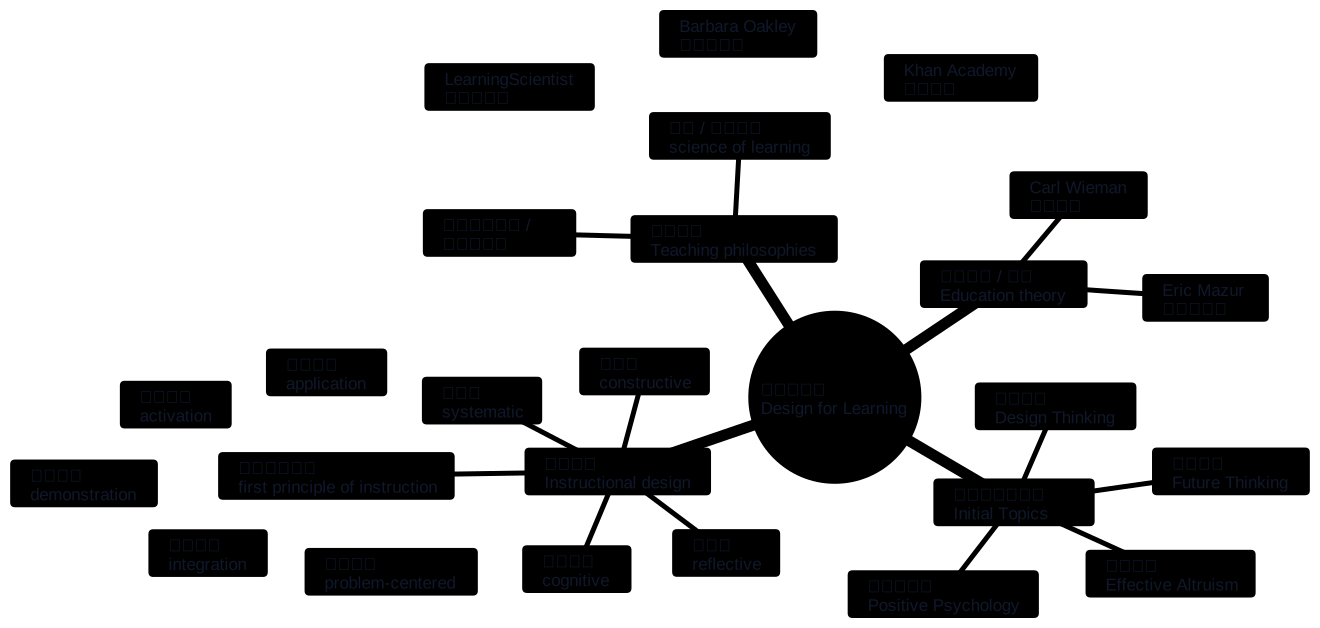
Overview mind map
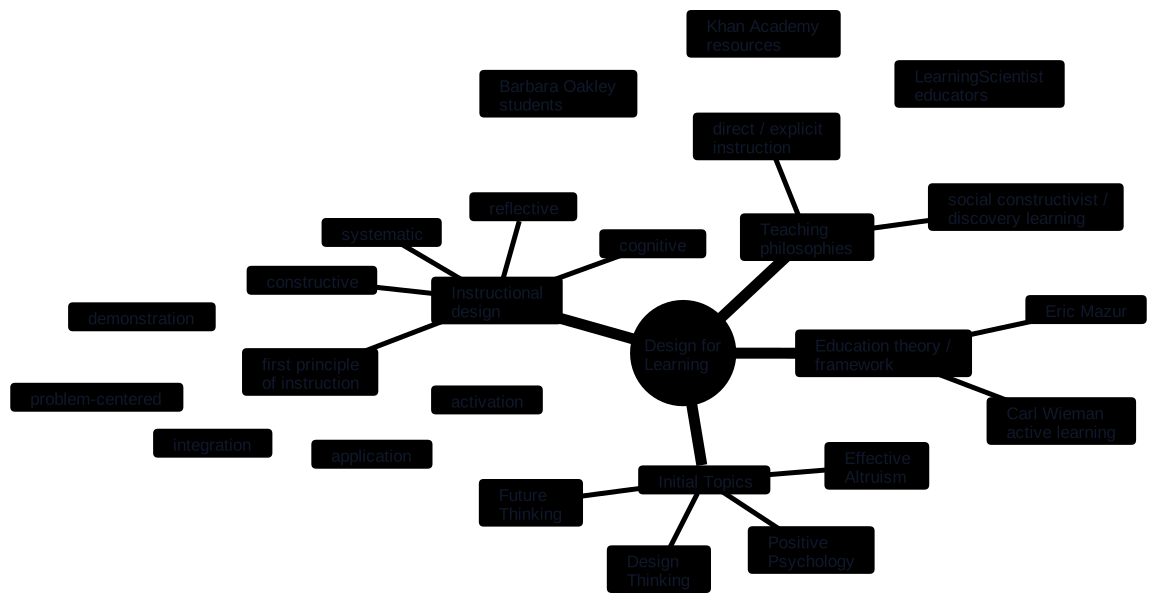
1. Instructional design
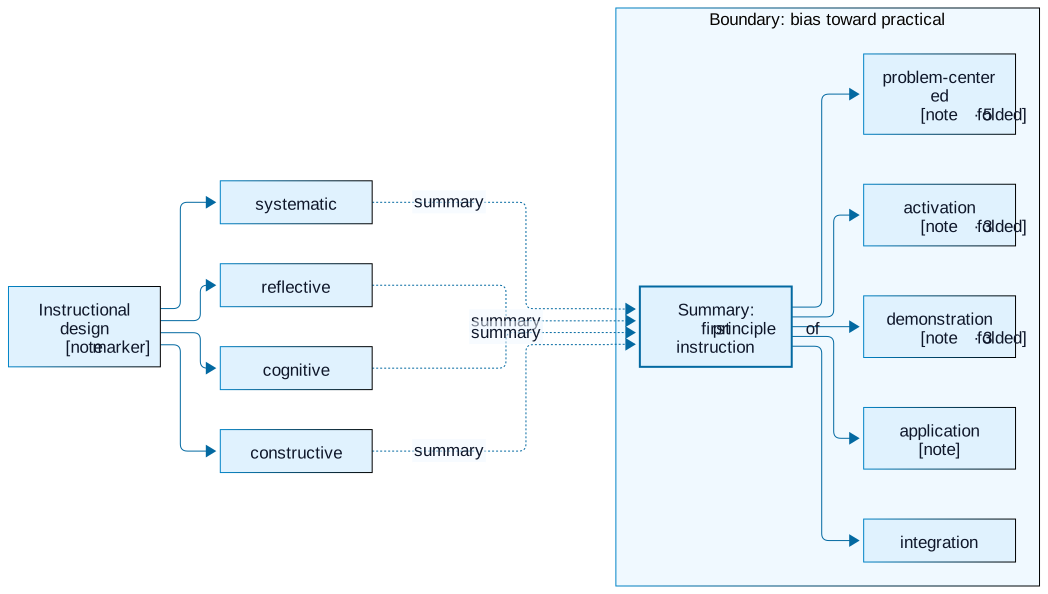
Decoded notes — Instructional design
- Parent node:
Instructional design(carries a topic-note marker in the 2023 map). - Core dimensions:
systematic,reflective,cognitive,constructive. - Boundary annotation:
bias toward practicalwraps the summary subtreefirst principle of instruction(M. David Merrill's five principles). - Summary subtopics:
problem-centered(topic-note marker;5folded subtopics in the original XMind file).activation(topic-note marker;3folded subtopics).demonstration(topic-note marker;3folded subtopics).application(topic-note marker).integration.
2. Teaching philosophies
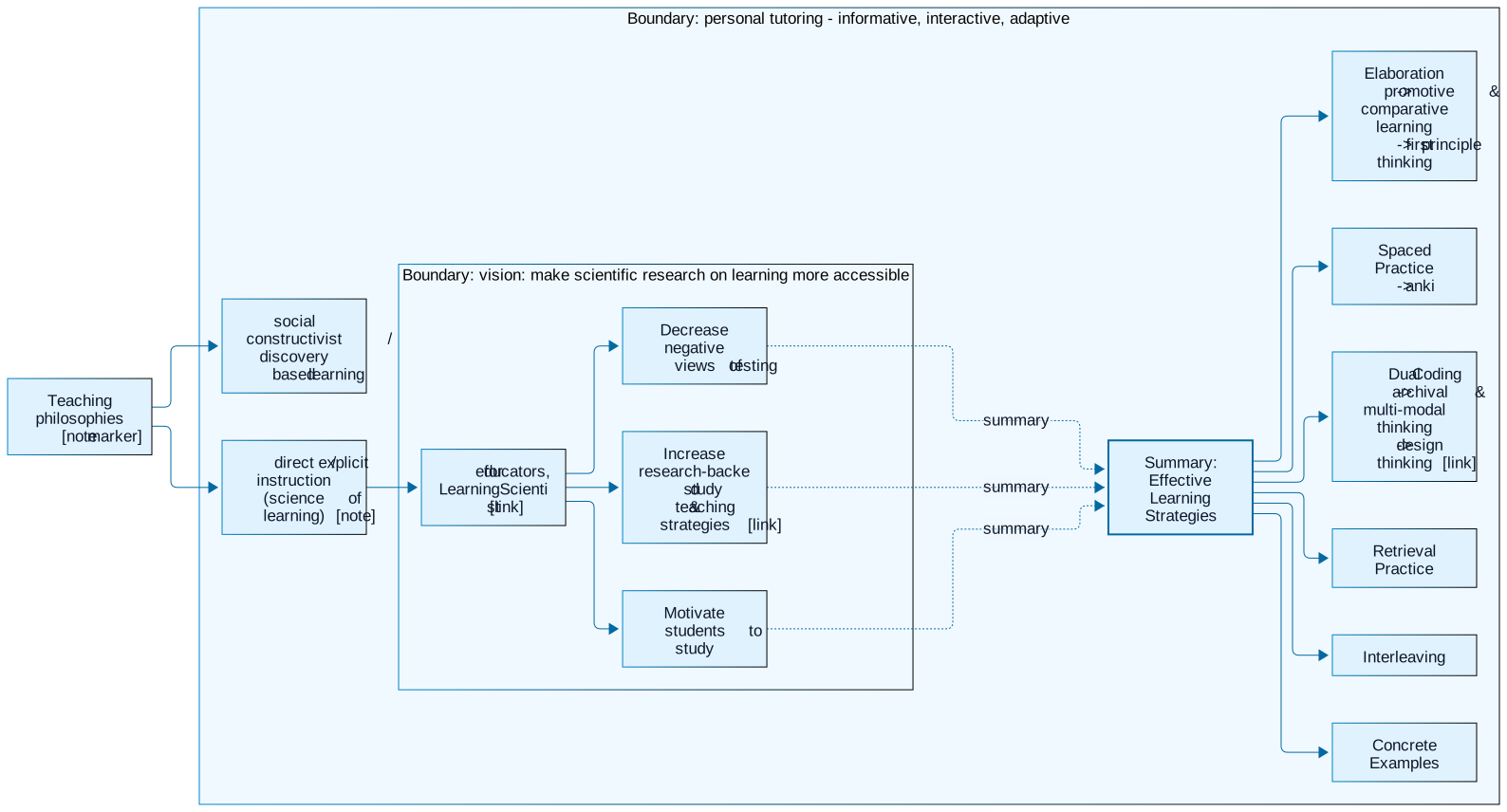
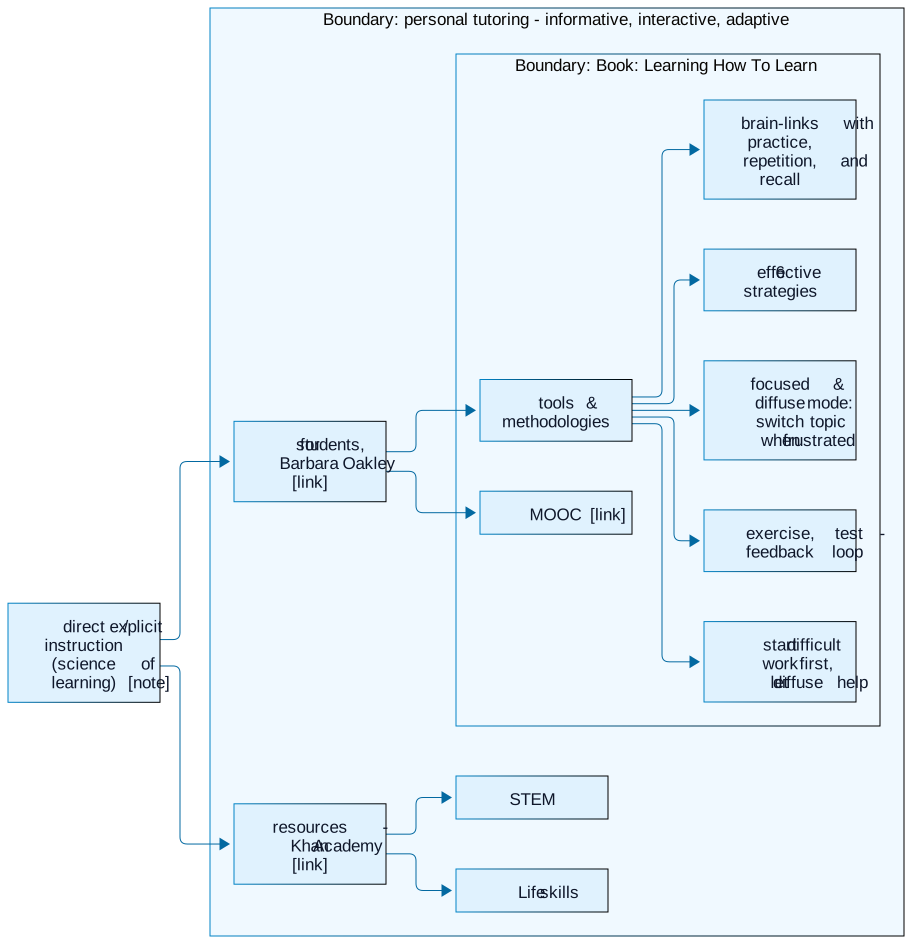
Decoded notes & links — Teaching philosophies
- Parent node:
Teaching philosophies(topic-note marker). - Outer boundary annotation:
personal tutoring -> informative, interactive, adaptiveframes the entireTeaching philosophiessubtree—linking the three experience principles that later shaped Open Learning directly to the tension between discovery-based and explicit instruction. - Branch A:
social constructivist/discovery based learning. - Branch B:
direct/explicit instruction (science of learning)(topic-note marker):for educators, LearningScientist— learningscientists.org- Boundary annotation:
vision: make scientific research on learning more accessiblewraps three goals:Motivate students to studyIncrease the use of effective study and teaching strategies that are backed by research— Downloadable MaterialsDecrease negative views of testing
- Summary brace —
Effective Learning Strategieswith decoded->follow-on notes:Spaced Practice→-> ankiRetrieval PracticeElaboration→-> promotive & comparative learning -> first principle thinkingInterleavingConcrete ExamplesDual Coding→-> archival skills & multi-modal thinking -> design thinking— Dual Coding / book link (Amazon)
- Boundary annotation:
for students, Barbara Oakley— Learning How to Learn (barbaraoakley.com)- Boundary annotation:
Book: Learning How To Learnwraps:tools & methodologies:6 effective strategies;focused & diffuse mode: switch topic when frustrated;brain-links with practice, repetition, and recall;exercise, test - feedback loop;start difficult work first, let diffuse helpMOOC— Coursera: Learning How to Learn
- Boundary annotation:
resources - Khan Academy— khanacademy.org:STEM,Life skills.
3. Education theory / framework
Decoded notes & links — Education theory / framework
- Parent node:
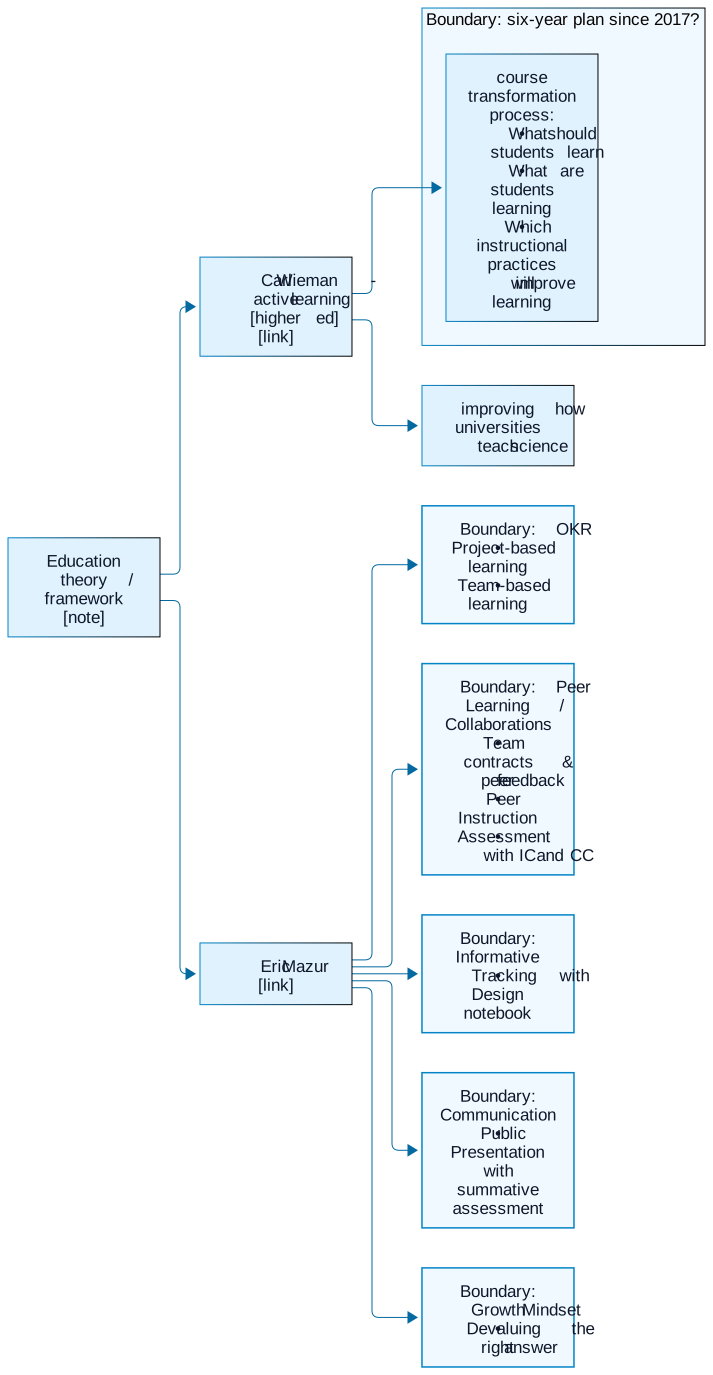
Education theory/framework(topic-note marker). Carl Wieman - active learning [higher ed]— Inside Higher Ed (27 June 2017)- Boundary annotation:
six-year plan since 2017?wrapscourse transformation process:What should students learnwhat are students learningwhich instructional practices will improve student learning
- Sibling note:
improving how universities teach science.
- Boundary annotation:
Eric Mazur— Harvard Instructional Moves: Eric Mazur- Boundary
OKR:Project-based learning,Team-based learning - Boundary
Peer Learning / Collaborations:Team contracts & peer feedback,Peer Instruction,Assessment with IC and CC - Boundary
Informative:Tracking with Design notebook - Boundary
Communication:Public Presentation with summative assessment - Boundary
Growth Mindset:Devaluing the right answer
- Boundary
4. Initial topics I thought about
Decoded notes & links — Initial topics I thought about
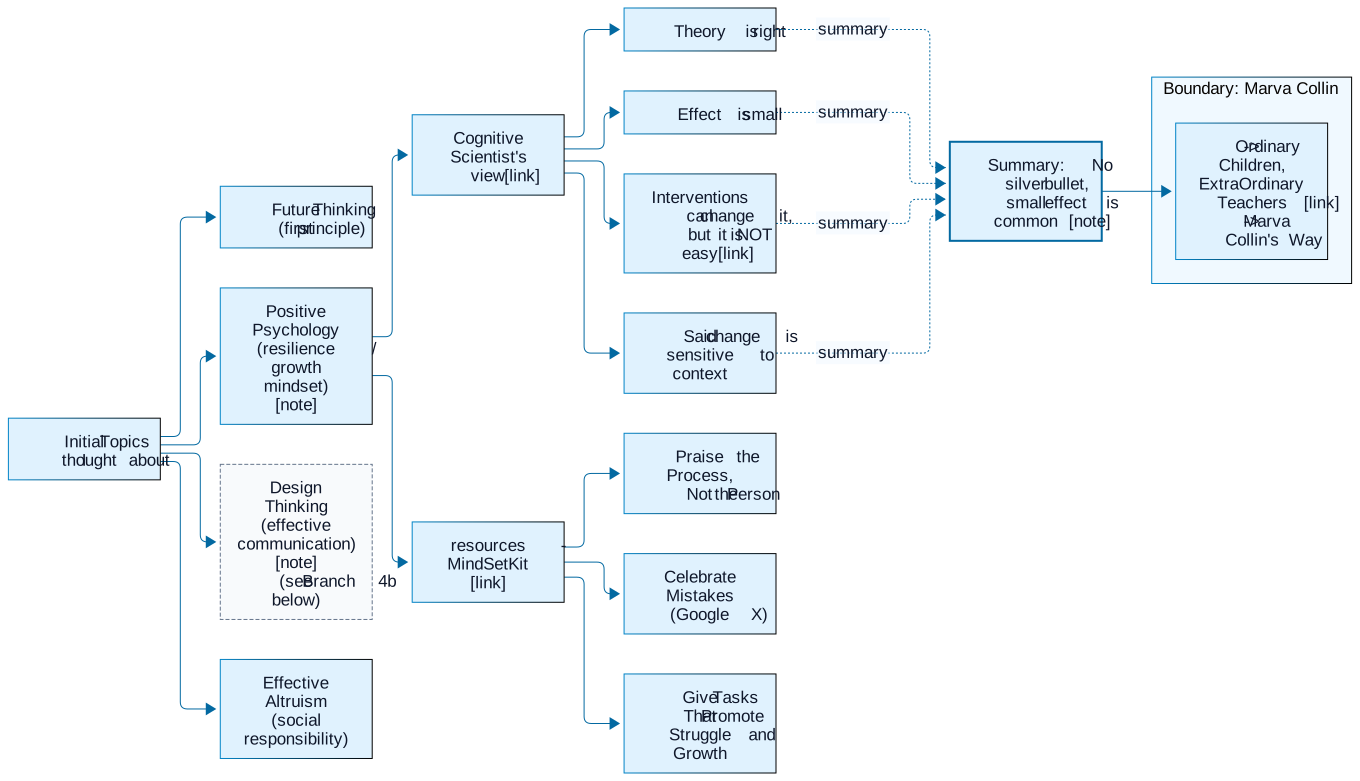
Future Thinking (first principle)Positive Psychology (resilience/growth mindset)(topic-note marker):Cognitive Scientist's view— Willingham, American Educator (Winter 2022–2023):Theory is rightEffect is smallInterventions can change it, but it is NOT easy— British Journal of Educational Psychology (DOI 10.1111/bjep.12572)Said change is sensitive to context
- Summary brace —
No silver bullet, small effect is common(topic-note marker), linked to BoundaryMarva Collin:-> Ordinary Children, ExtraOrdinary Teachers— Enki Library: Marva Collins' Way / Ordinary Children-> Marva Collin's Way
resources - MindSetKit— mindsetkit.org:Praise the Process, Not the PersonCelebrate Mistakes (Google X)Give Tasks That Promote Struggle and Growth
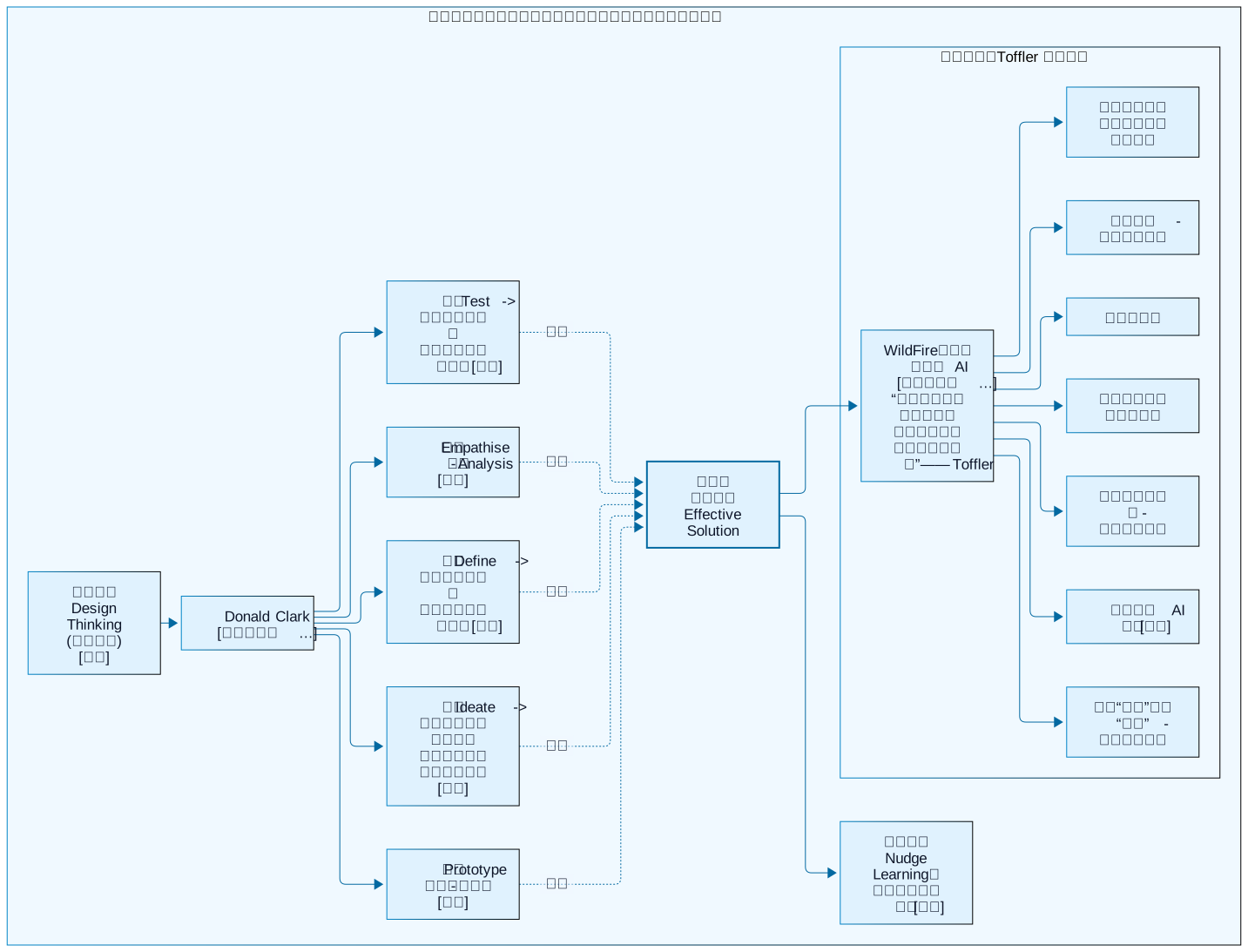
Design Thinking (effective communication)(topic-note marker):- Outer boundary annotation:
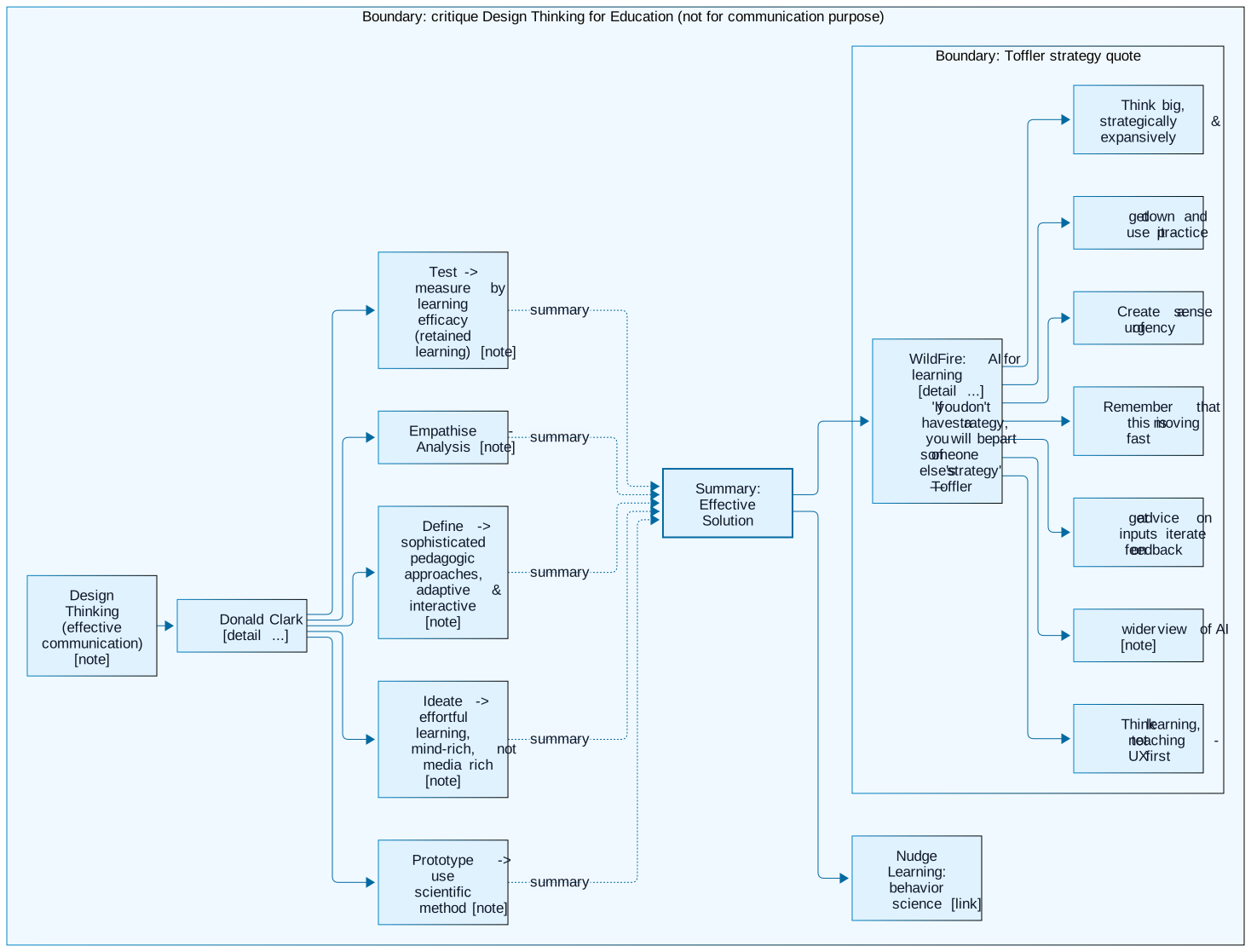
critique Design Thinking for Education (not for communication purpose)wraps the following critique and AI learning subtree: Donald Clark(detail badge…) — all five steps carry topic-note markers:Empathise -> Analysis(note marker)Define -> sophisticated pedagogic approaches, adaptive & interactive(note marker)Ideate -> effortful learning, mind-rich, not media rich(note marker)Prototype -> use scientific method(note marker)Test -> measure by learning efficacy (retained learning)(note marker)
- Summary brace —
Effective Solutionleads into:Nudge Learning: behavior science in learning— Donald Clark Plan B: nudge- Boundary quotation:
“If you don’t have a strategy, you will be part of someone else’s strategy” TofflerwrapsWildFire: AI for learning(detail badge…):get down and use it -> practiceget advice on inputs -> iterate on feedbackThink big, strategically and expansivelywider view of AI(note marker)Think learning, not teaching. -> UX firstCreate a sense of urgencyRemember that this is moving fast
- Outer boundary annotation:
Effective Altruism (social responsibility)
Complete index of 13 embedded links from the original map
Status: decoded reading map from 10 March 2023 (Xmind/22.11.3656). Not a programme evaluation or validation of the full Open Learning hypothesis.
Related reading: Open Learning: From Individual Potential to Collective Discovery · Two people, a wider horizon · Open Learning Lab.
以原生 Mermaid 图示与结构化中文文本完整解码 2023 年 3 月 10 日的 XMind 导图(
Design for Learning),逐项还原分支结构、边界注释、汇总框、图标标记及全部 13 条原始参考链接,替代原先直接提供的 PDF 文件。
这份学习导图制作于 2023 年 3 月 10 日(XMind),是撰写 开放学习:从个人潜能到共同探索 与中文简述 我对未来教育的期待 之前的早期阅读整理。本页不再提供难以检索的 103 kB 原始 PDF,而是将其解码为原生 Mermaid 图示、结构化笔记与可点击的参考索引。
XMind 标注与图元如何解码
这份 2023 年 3 月 10 日导出的单页 XMind PDF(Xmind/22.11.3656,1191.1 × 841.9 pt)在主题层级之外还包含四类视觉标注。原始 PDF 的批注流与文件流中并未嵌入隐藏弹窗正文或折叠子节点的文本——其中仅包含下方列出的 13 条外部超链接——因此本页还原的所有说明均忠实来自导图中可见的边界标注、标记符号与链接目标:
- 边界注释(深蓝底白字边框标注): XMind 中框住整组子树并附带概括标签的边界框(例如
bias toward practical、personal tutoring -> informative, interactive, adaptive、vision: make scientific research on learning more accessible、six-year plan since 2017?、Eric Mazur 的五组边框标签、Marva Collin、critique Design Thinking for Education,以及 Alvin Toffler 的战略引语)。 - 汇总框与箭头延展标记: 虚线汇总括弧(
first principle of instruction、Effective Learning Strategies、No silver bullet, small effect is common、Effective Solution)以及节点内的->延伸批注(如-> anki、-> promotive & comparative learning -> first principle thinking、-> archival skills & multi-modal thinking -> design thinking)。 - 笔记(
≡)与详情(…)图标标记: 导图中的笔记图标出现在Instructional design、problem-centered、activation、demonstration、application、Teaching philosophies、direct/explicit instruction (science of learning)、Education theory/framework、Positive Psychology (resilience/growth mindset)、No silver bullet, small effect is common、Design Thinking (effective communication)、Donald Clark下的全部五个阶段,以及wider view of AI。圆形省略号详情标记(…)出现在Donald Clark与WildFire: AI for learning上。 - 折叠子主题计数徽章:
first principle of instruction下的三个节点在原 XMind 工作区中带有折叠计数徽章:problem-centered(折叠5项)、activation(折叠3项)与demonstration(折叠3项)。这些折叠子主题在 2023 年的 PDF 导出版本中并未展开。
总览思维导图
一、教学设计(Instructional design)
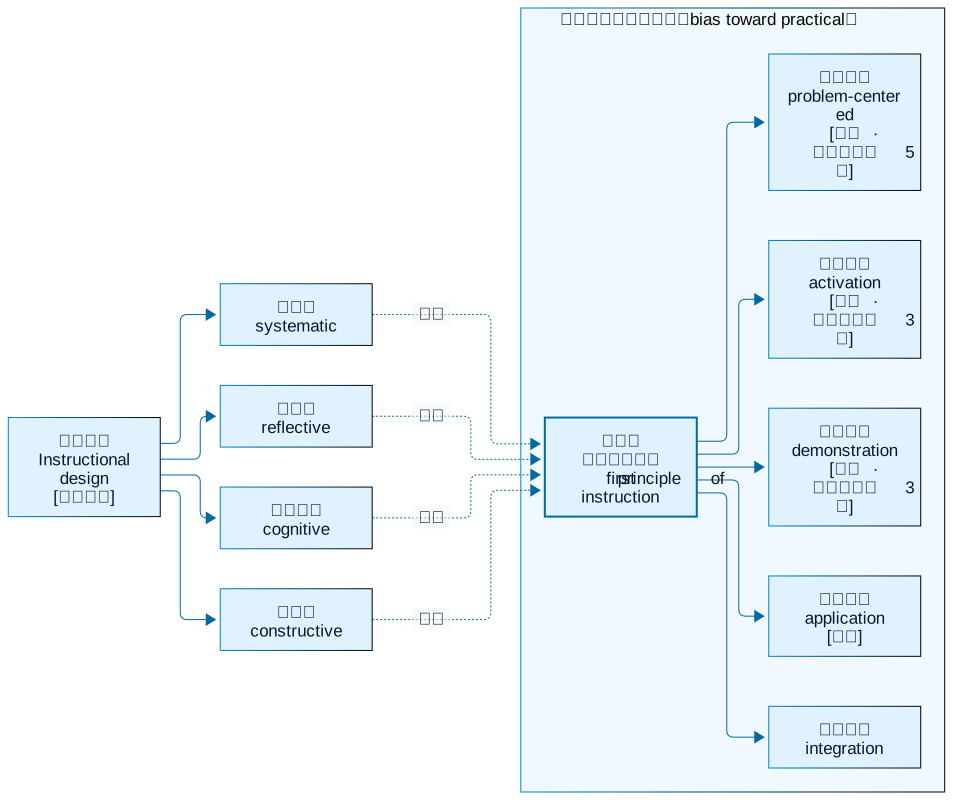
解码笔记 —— 教学设计
- 父节点:
Instructional design(教学设计,2023 年原导图带有笔记图标≡)。 - 四个核心维度:
systematic(系统化)、reflective(反思性)、cognitive(认知导向)、constructive(建构性)。 - 边界注释:
bias toward practical(偏向实践)框住了汇总子树first principle of instruction(M. David Merrill 的首要教学原理五原则)。 - 汇总子主题:
problem-centered(问题中心,笔记标记;原 XMind 文件中折叠5个子主题)。activation(激活旧知,笔记标记;原导图折叠3个子主题)。demonstration(示证新知,笔记标记;原导图折叠3个子主题)。application(应用新知,笔记标记)。integration(融会贯通)。
二、教学哲学(Teaching philosophies)
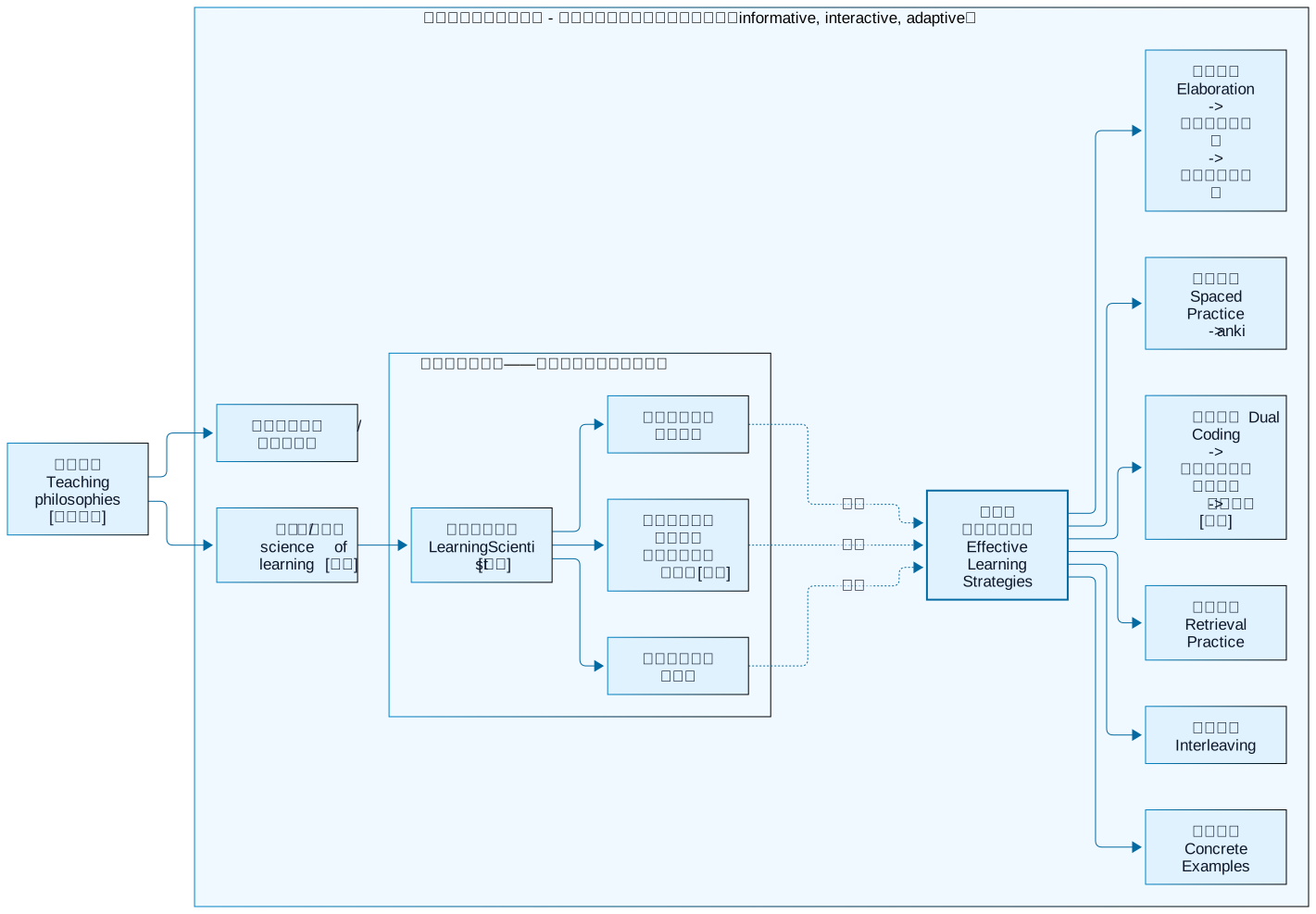
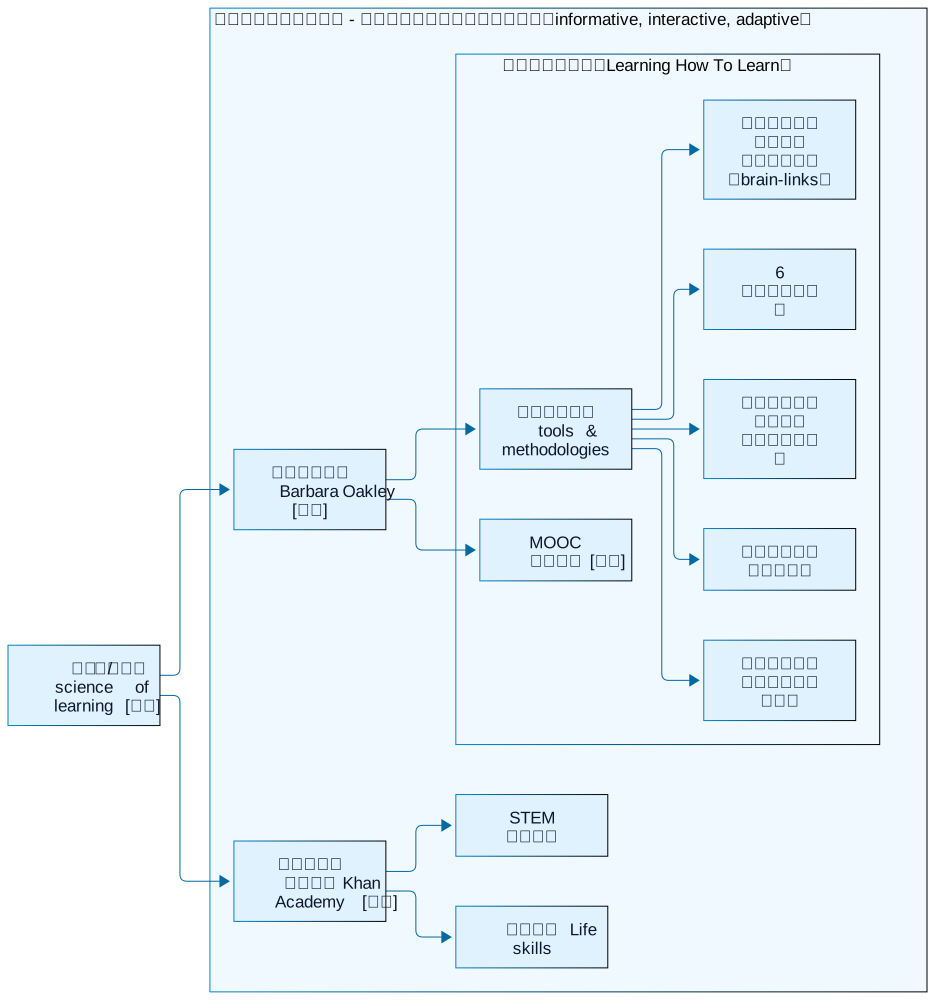
解码笔记与链接 —— 教学哲学
- 父节点:
Teaching philosophies(教学哲学,笔记标记)。 - 外层边界注释:
personal tutoring -> informative, interactive, adaptive(个性化辅导 → 清晰定向、主动交互、动态适配)框住了整个Teaching philosophies子树——将后来塑造 Open Learning 与 我对未来教育的期待 的三条学习体验原则,直接与“发现式学习 vs 显性教学”的张力连接起来。 - 分支 A:
social constructivist/discovery based learning(社会建构主义 / 发现式学习)。 - 分支 B:
direct/explicit instruction (science of learning)(直接 / 显性教学,学习科学,笔记标记):for educators, LearningScientist(面向教育者:LearningScientist) —— learningscientists.org- 边界注释:
vision: make scientific research on learning more accessible(愿景:让学习科学研究更易触达)框住三项目标:Motivate students to study(激发学生的学习动力)Increase the use of effective study and teaching strategies that are backed by research(推广有研究证据支撑的有效学习与教学策略)—— 可下载学习材料(Downloadable Materials)Decrease negative views of testing(减少对测验的负面印象)
- 汇总括弧 ——
Effective Learning Strategies(有效学习策略)及原图中的->延伸批注:Spaced Practice(间隔练习)→-> ankiRetrieval Practice(提取练习)Elaboration(精细加工)→-> promotive & comparative learning -> first principle thinking(促进与对比学习 → 第一性原理思维)Interleaving(交错练习)Concrete Examples(具体例子)Dual Coding(双重编码)→-> archival skills & multi-modal thinking -> design thinking(归档能力与多模态思维 → 设计思维) —— 双重编码 / 相关图书链接(Amazon)
- 边界注释:
for students, Barbara Oakley(面向学习者:Barbara Oakley) —— 《Learning How to Learn》(barbaraoakley.com)- 边界注释:
Book: Learning How To Learn框住以下内容:tools & methodologies(工具与方法论):6 effective strategies(6 项有效学习策略);focused & diffuse mode: switch topic when frustrated(专注模式与发散模式:遇到卡点时切换主题);brain-links with practice, repetition, and recall(通过练习、重复与回忆建立神经连接);exercise, test - feedback loop(练习、测验与反馈闭环);start difficult work first, let diffuse help(先攻克难题,让发散思维接手协助)MOOC(在线课程)—— Coursera:Learning How to Learn
- 边界注释:
resources - Khan Academy(学习资源:可汗学院) —— khanacademy.org:STEM(理工学科)、Life skills(生活技能)。
三、教育理论 / 框架(Education theory / framework)
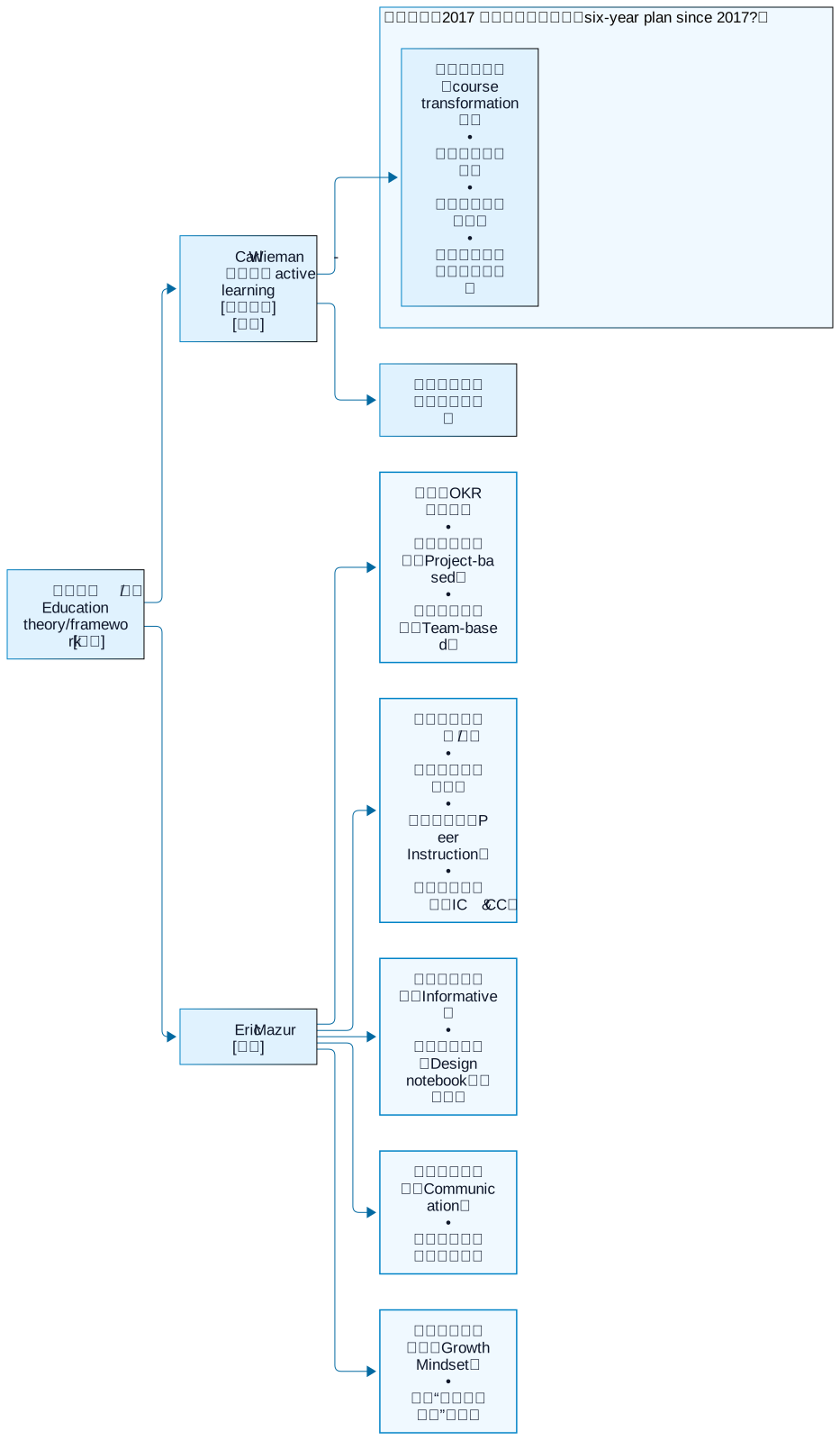
解码笔记与链接 —— 教育理论 / 框架
- 父节点:
Education theory/framework(教育理论 / 框架,笔记标记)。 Carl Wieman - active learning [higher ed](主动学习 [高等教育]) —— Inside Higher Ed 报道(2017 年 6 月 27 日)- 边界注释:
six-year plan since 2017?(2017 年起的六年计划?)框住course transformation process(课程改造流程):What should students learn(学生应当学会什么)what are students learning(学生实际学到了什么)which instructional practices will improve student learning(哪些教学实践能改善学习效果)
- 同级补充节点:
improving how universities teach science(改进大学科学课程的教学方式)。
- 边界注释:
Eric Mazur—— Harvard Instructional Moves: Eric Mazur- 边界
OKR:Project-based learning(基于项目的学习)、Team-based learning(基于团队的学习) - 边界
Peer Learning / Collaborations(同伴学习 / 协作):Team contracts & peer feedback(团队契约与同伴反馈)、Peer Instruction(同伴教学法)、Assessment with IC and CC(个人能力与协作贡献评估) - 边界
Informative(清晰定向):Tracking with Design notebook(用设计笔记本追踪过程) - 边界
Communication(沟通表达):Public Presentation with summative assessment(结合总结性评估的公开展示) - 边界
Growth Mindset(成长型思维):Devaluing the right answer(降低“唯一正确答案”的权重)
- 边界
四、最初思考的主题(Initial topics I thought about)
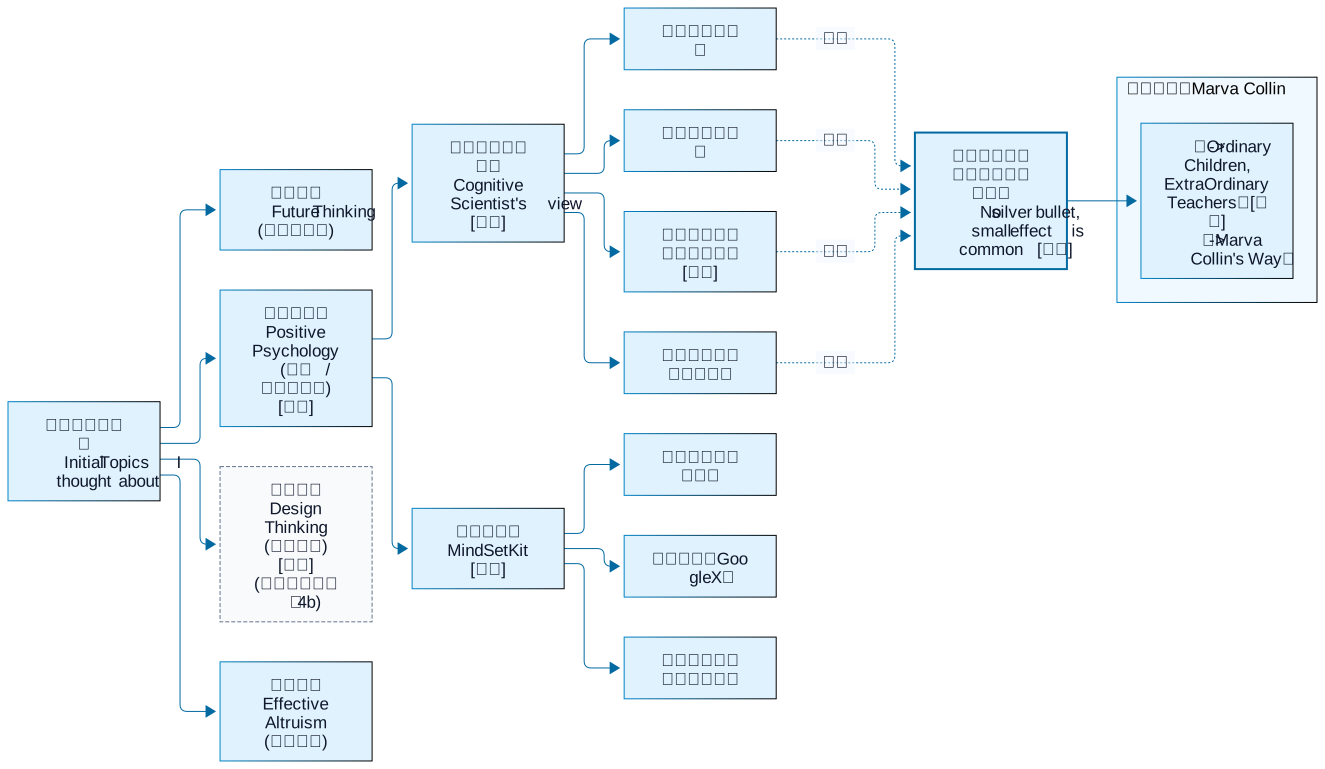
解码笔记与链接 —— 最初思考的主题
Future Thinking (first principle)(未来思维 · 第一性原理)Positive Psychology (resilience/growth mindset)(积极心理学 · 韧性 / 成长型思维) (笔记标记):Cognitive Scientist's view(认知科学家的观点) —— Willingham, American Educator(2022–2023 冬季刊):Theory is right(理论方向是对的)Effect is small(实际效应量较小)Interventions can change it, but it is NOT easy(干预可以带来改变,但绝非易事)—— 《英国教育心理学杂志》(DOI 10.1111/bjep.12572)Said change is sensitive to context(这种改变高度依赖具体情境)
- 汇总括弧 ——
No silver bullet, small effect is common(没有银弹,小效应才是常态) (笔记标记),连向 边界Marva Collin:-> Ordinary Children, ExtraOrdinary Teachers—— Enki Library:Marva Collins' Way / Ordinary Children-> Marva Collin's Way
resources - MindSetKit(学习资源:MindSetKit) —— mindsetkit.org:Praise the Process, Not the Person(表扬过程,而非个人)Celebrate Mistakes (Google X)(庆祝错误,Google X)Give Tasks That Promote Struggle and Growth(布置促进挑战与成长的任务)
Design Thinking (effective communication)(设计思维 · 有效沟通) (笔记标记):- 外层边界注释:
critique Design Thinking for Education (not for communication purpose)(批判用于教育的设计思维,而非否定其沟通价值)框住下方批判与 AI 学习子树: Donald Clark(详情标记…) —— 五个步骤均带有笔记图标:Empathise -> Analysis(共情 → 分析)(笔记标记)Define -> sophisticated pedagogic approaches, adaptive & interactive(定义 → 精细化教学法、自适应与交互式方法)(笔记标记)Ideate -> effortful learning, mind-rich, not media rich(构想 → 付出认知努力的学习:重思维密度,而非媒体花哨)(笔记标记)Prototype -> use scientific method(原型 → 运用科学方法)(笔记标记)Test -> measure by learning efficacy (retained learning)(测试 → 以学习实效衡量,即长时留存的学习)(笔记标记)
- 汇总括弧 ——
Effective Solution(有效方案)引出:Nudge Learning: behavior science in learning(助推学习:学习中的行为科学) —— Donald Clark Plan B: nudge- 边界引语:
“If you don’t have a strategy, you will be part of someone else’s strategy” Toffler(“如果你没有自己的战略,就会成为别人战略的一部分”—— 托夫勒)框住WildFire: AI for learning(用于学习的 AI) (详情标记…):get down and use it -> practice(动手去用 → 在实践中学习)get advice on inputs -> iterate on feedback(就输入请教建议 → 围绕反馈迭代)Think big, strategically and expansively(格局要大,保持战略性与延展性思维)wider view of AI(更宏观的 AI 视角)(笔记标记)Think learning, not teaching. -> UX first(思考“学习”而非“教学” → 用户体验优先)Create a sense of urgency(营造紧迫感)Remember that this is moving fast(记住这一切正在高速演进)
- 外层边界注释:
Effective Altruism (social responsibility)(有效利他 · 社会责任)
原导图嵌入的 13 条链接完整索引
状态说明:本页为 2023 年 3 月 10 日学习导图(Xmind/22.11.3656)的解码还原记录,并非已落地的教学项目评估,也不能作为完整 Open Learning 假设的实证结论。
延伸阅读:我对未来教育的期待(中文简述) · Open Learning 英文工作草案 · Two people, a wider horizon 共享知识演示 · Open Learning Lab。